
 한국어
 English
 中文
 日本語
MEDICAL SKINCARE
Identifying the cause and depth,
planning the order of treatment
We look beyond visible symptoms to the causes and depths of pigmentation, sebum, inflammation, and scars, then plan treatment and recovery care in sequence.
01Assessing causes and lesion depth02Planning treatment combinations and sequence03Recovery care & sun protection
PLAN ME · APPROACH
Understanding your concerns in detail,
planning with clarity
We distinguish the cause and depth of skin concerns and organize laser, recovery, and skin-care programs in stages.
Suitability and the approach for each program are determined after a thorough consultation and medical assessment.
PERSONAL PLANNING STANDARD
From assessment to recovery
one connected approach
We look beyond visible symptoms to the causes and depths of pigmentation, sebum, inflammation, and scars before setting the treatment sequence.
Assessing cause and depth
We first assess skin type, lesion depth, and sensitivity.
Planning treatment combinations
We combine laser treatment, skin care, and recovery care as needed.
Recovery care & sun protection
After treatment, we explain care that considers the skin barrier and pigmentation risk.
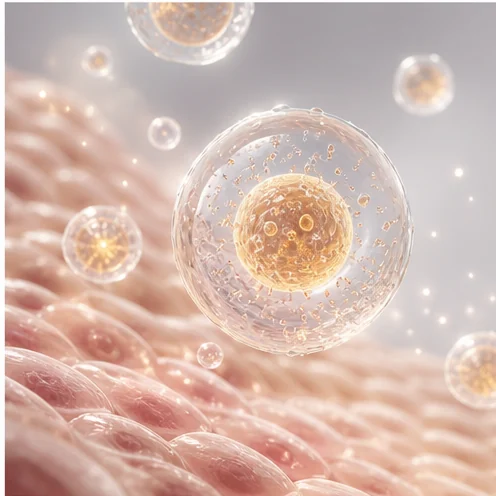
Exosome Care
For sensitive or tired skin, we assess whether a suitable product may be used alongside laser or microneedling, with attention to the skin’s recovery environment.
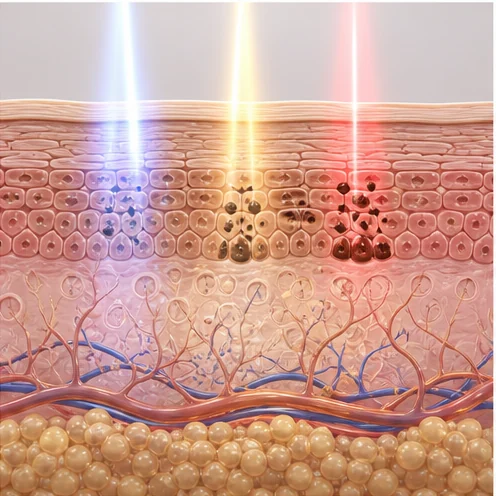
Pigmentation & Skin-tone Care
We identify the type and depth of pigmentation, including melasma, spots, and freckles, to combine appropriate laser and skin-tone care.
PROGRAM GUIDEComplete pigmentation treatment detailsExplore the existing detailed images, explanations, and videos in order
PROGRAM DETAIL
Pigmentation & Skin-tone CareDetailed information
Key principles and treatment approaches are explained by topic.
Specific methods and the number of sessions are determined after medical assessment.
Melasma
PLANME PERSONAL PROGRAM
Plan Me melasma and pigmentation program
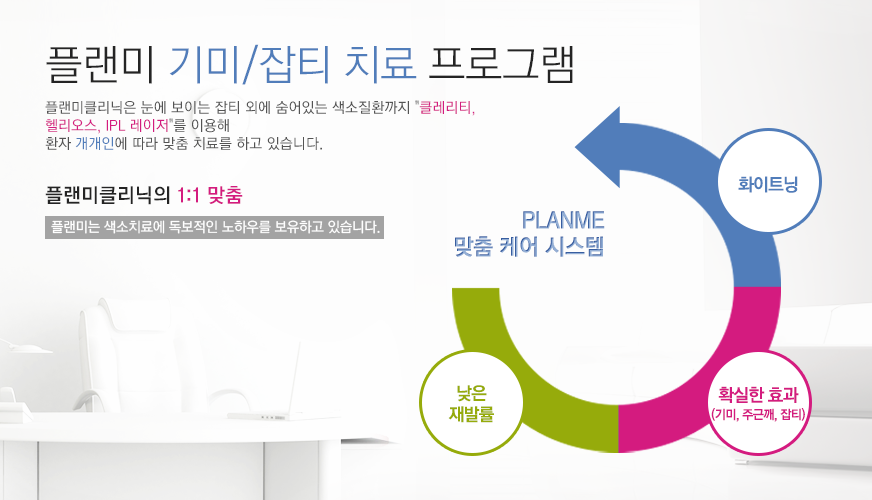
Plan Me tailors treatment for visible and less-obvious pigmentation using options such as Clarity, Helios, IPL, and other lasers according to the individual assessment.
care system
- Skin-tone care
- Managing recurrence risk
- Individual treatment goals(Melasma, freckles, and pigmentation spots)
Plan Me draws on experience in pigmentation treatment.
Brown facial pigmentation with irregular borders, often appearing in women in their 20s and 30s. Areas and causes are assessed individually.
Freckles
Freckles are small pigmented spots caused by increased melanin production, commonly appearing on sun-exposed areas such as the face, neck, and shoulders. Pigment is located in the epidermis.
Pigmentation spots
Dark spots or a dull complexion are often described broadly as age spots or pigmentation, but the underlying lesions need assessment.
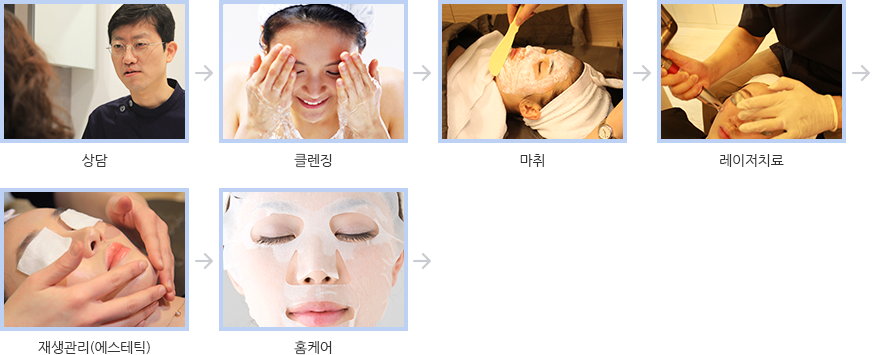
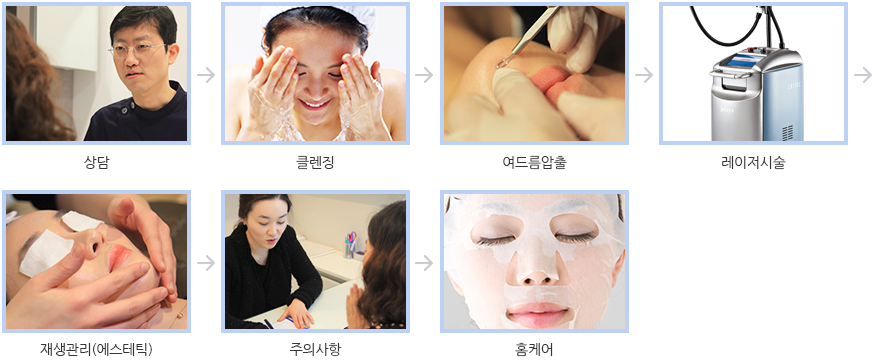
Plan Me melasma&and pigmentation treatment process
- 01
Consultation
- 02
Cleansing
- 03
Anesthesia
- 04
Laser treatment
- 05
Recovery care (aesthetic care)
- 06
Home care
The key consideration is care that accounts for recurrence and irritation. We identify pigmentation type and depth to combine appropriate laser and skin-tone care.
Clarity
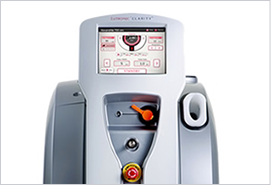
Clarity uses a 755 nm laser for selected pigmentation, freckles, skin-tone, and other concerns. Unlike broadband IPL, its wavelength can be selected to target particular tissue. Depending on the diagnosis and settings, treatment may also address texture, pores, or firmness. Benefits and risks vary, particularly for melasma.&Areas considered: pigmentation, vascular concerns, hair removal, and firmness. A course may involve 6 or more sessions at 1–2-week intervals, lasting about 10–15 minutes each. Freckles, melasma, spots, pores, firmness, texture, fine lines, and redness require individualized assessment.
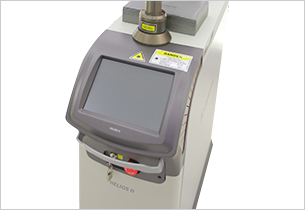
Helios II Laser Toning
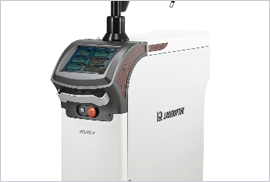
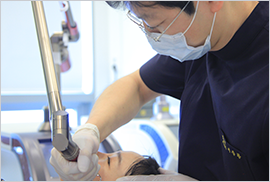
Conventional laser toning often uses a 1064 nm wavelength with a limited number of modes. Helios II offers 1064 nm and 532 nm wavelengths and multiple modes for pigmentation at different depths. Handpiece options include 1064 nm, 532 nm, collimator, and zoom; mode options include 532 nm, FR, RTP 1064 nm, and RTP 532 nm. A course of 5–10 sessions at 1–2-week intervals may be considered for selected pigmentation, skin-tone, firmness, pore, or texture concerns, with the actual plan determined individually.
Jeisys Cellec
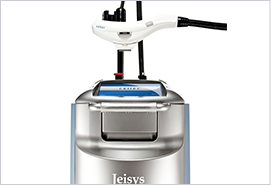
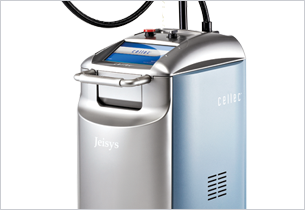
Jeisys Cellec is an IPL-based light-treatment system with selectable wavelengths in the 420–800 nm range for different skin concerns. Depending on the filter and diagnosis, it may be considered for pigmentation, redness, or other skin-quality concerns. Built-in cooling and temperature control support comfort, but pain, burns, or pigment changes remain possible. Treatment intervals are selected after medical assessment.
Lower energy settings may help manage treatment-related pigment changes, but hypopigmentation and post-inflammatory hyperpigmentation remain possible. IPL (P-nain) may be planned for 3–5 sessions at 3–4-week intervals for selected capillary, redness, freckle, pigmentation, fine-line, pore, or hair-removal concerns.
Glutathione Injection
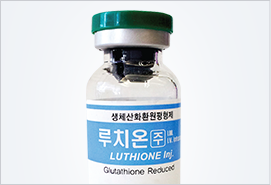
A program using glutathione. Evidence for intravenous glutathione as a cosmetic skin-lightening treatment is limited, and benefits for firmness or radiance cannot be assumed. Please discuss likely benefits, limitations, and possible adverse reactions during consultation.
1. Plan Me’s approach to melasma&and pigmentation
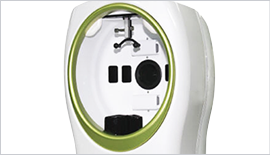
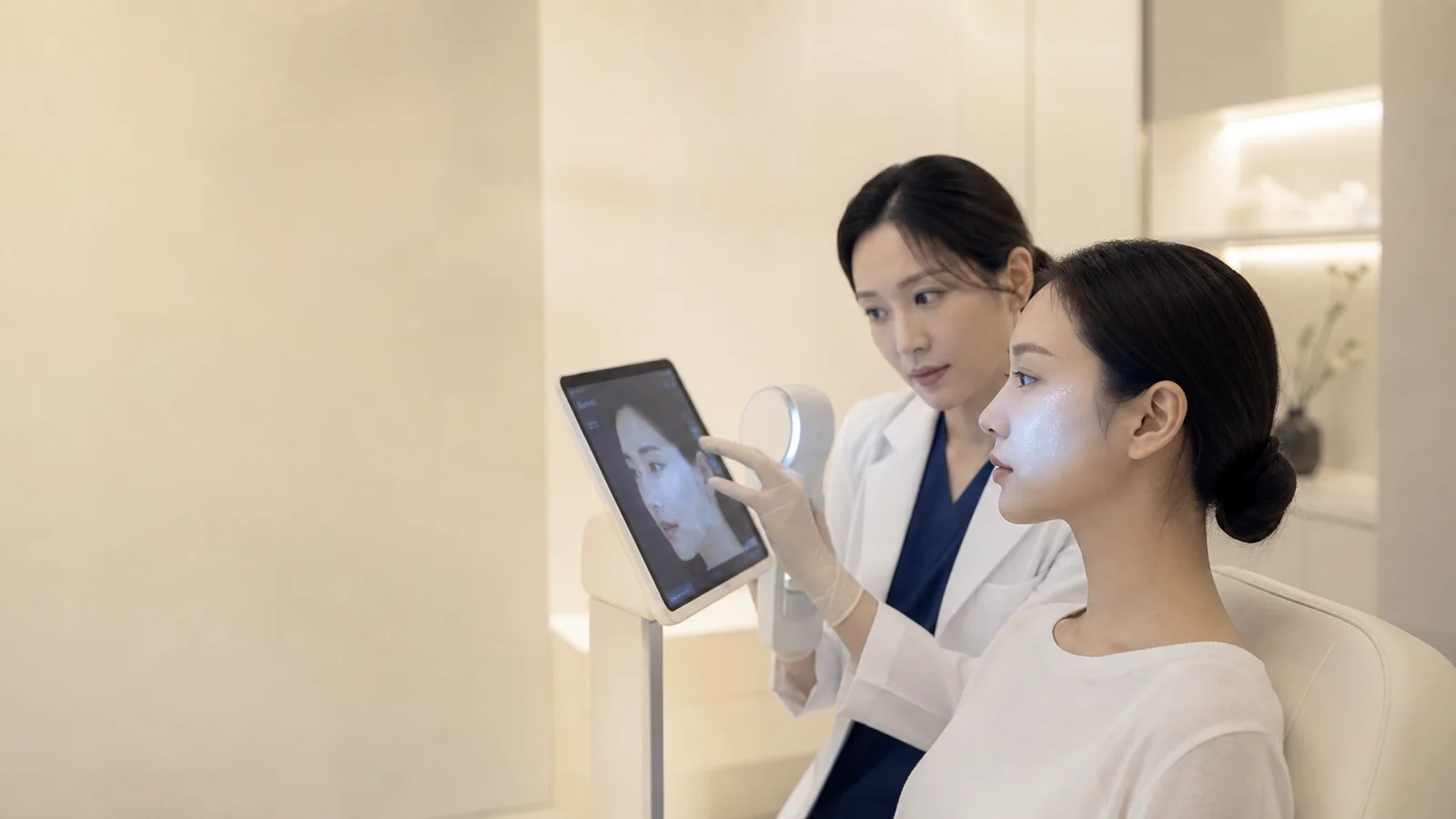
For structured care, Plan Me uses JANUS skin imaging before treatment to help assess concerns and select a suitable program. JANUS is a facial skin-analysis system using a 1-megapixel camera and three light sources—standard, polarized, and ultraviolet—to reveal features that may be difficult to see unaided. Images and measurements help explain the skin findings during consultation.
Standard light: texture, pores, wrinkles, and contours. Polarized light: pigmentation, acne, and acne marks. Ultraviolet light: sebum, porphyrins, pigmentation, and surface buildup. Assessment covers skin texture, pores, wrinkles, pigmentation, acne, dead skin, and sebum. Time: 5–10 minutes. Fee: discussed during consultation. Results: available promptly.
Care after treatment
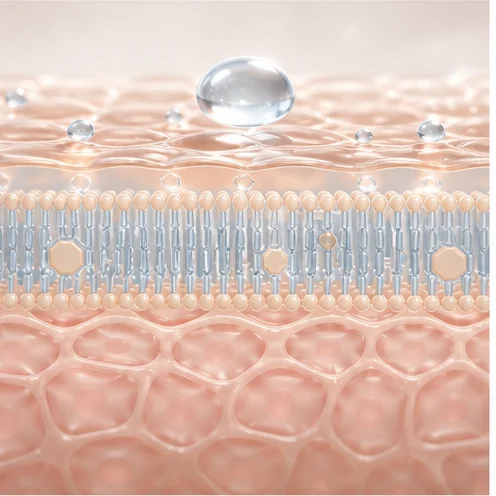
Please apply sunscreen when outdoors, avoid excessive cleansing, maintain adequate sleep, and reduce alcohol, smoking, and stress where possible.
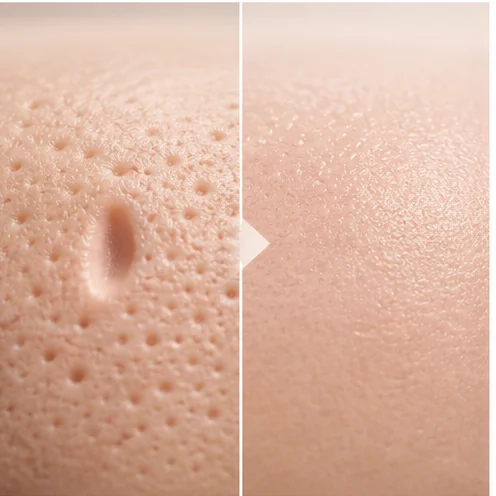
Acne Treatment
We assess sebum, comedones, and inflammation to combine appropriate steps such as extraction, peeling, and light treatment.
PROGRAM GUIDEComplete acne treatment detailsExplore the existing detailed images, explanations, and videos in order
PROGRAM DETAIL
Acne TreatmentDetailed information
Key principles and treatment approaches are explained by topic.
Specific methods and the number of sessions are determined after medical assessment.
What is acne?
ACNE TYPES
Main contributors to acne
- 01Early acne
- 02Pustular acne
- 03Acne conglobata
- 04Adolescent acne
- 05Adult acne
Acne develops when excess sebum and skin-cell buildup obstruct follicles, with inflammation and bacterial activity contributing. Because causes and patterns differ, care should be tailored to each person’s skin and acne type. Treatment aims to manage clogged pores, excess oil, inflammation, and acne-associated bacteria without unnecessarily irritating the skin.
PLANME ACNE CARE
Plan Me acne treatment program
Plan Me offers individualized acne treatment with attention to response and ongoing recurrence management.
Plan Me Clinic’s one-to-one care — Drawing on experience in acne management.
- Attention to comfortTreatment planning that considers your concerns
- Managing recurrence riskMaintenance guidance after treatment
- Individual treatment goalsStepwise care suited to skin condition
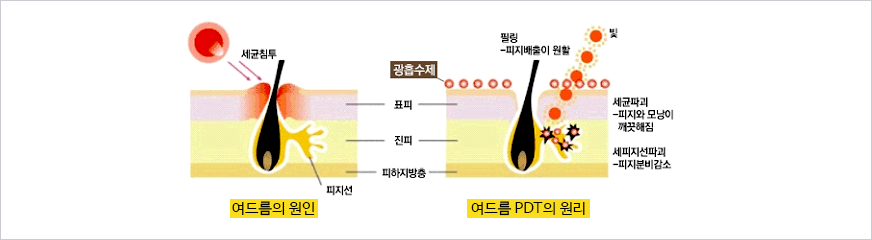
Photodynamic Therapy (PDT)
Contributors to acne
- Bacterial activity
- Inside the pore
- Sebaceous gland
- Sebum production
- Epidermis
- Skin surface
- Dermis
- Within the skin
- Subcutaneous-fat layer
- Underlying tissue
How acne PDT works
- Photosensitizer
- Peeling to support sebum drainage
- Light
- Photosensitizer activation
- Target-cell effects
- – Helping clear follicles and sebum
- Target-cell effects
- – Reducing sebum production
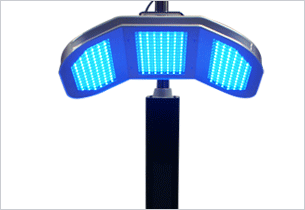
PDT uses a light source such as Dermalight and a photosensitizer for selected inflammatory or persistent acne. Concentration and application time are adjusted to acne severity and skin condition. Treatment aims to reduce acne-associated bacteria and sebum and support longer-term control, but irritation and recurrence remain possible.
Aqua Peel
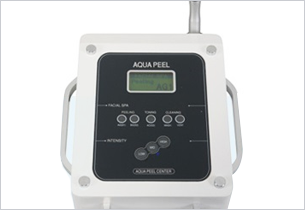

- Exfoliation and pore cleansing
- A BHA (salicylic acid) solution to address debris, sebum, and follicular buildup
- Hydration and delivery of suitable ingredients
Helps remove surface buildup and maintain hydration during acne care; mite-related concerns require assessment.
Aqua Peel features
- May be considered across different skin types after assessing suitability.
- Skin tone and sebum may improve after a session; responses vary.
- Redness or flaking can occur, depending on skin sensitivity.
- Sessions are relatively brief, with attention to comfort.
Glycolic acid(GA)
Glycolic acid (GA) peeling is a skin-exfoliation method whose intensity depends on concentration, pH, and contact time. Glycolic acid, derived from sources such as sugar cane, can be used at different strengths to promote exfoliation and skin turnover. Use on the face, chest, back, hands, or feet, especially on sensitive skin, requires individual suitability assessment.
What are the potential benefits of GA peeling for acne care?
- GA peeling helps remove dead skin and may support a more hydrated appearance.
- The concentration can be tailored to individual skin condition.
- Daily cleansing and makeup may be possible after treatment, according to skin response and aftercare advice.
- A carefully selected approach can limit irritation, though reactions remain possible.
GA peeling treatment goals

- Acne care
- Pore care
- Pigmentation care
- Exfoliation
- Skin-tone improvement
GA peeling is applied to the skin for about 10–15 minutes to address selected acne, pore, pigmentation, and surface-buildup concerns. Exfoliation may improve texture and tone and help with comedonal acne and clogged pores. Response and recovery vary.
* Higher-strength GA peels, such as 30% or above, require medical supervision. At Plan Me Clinic, the clinic director personally provides the procedure.
GA peeling acne-care program process
- Cleansing
- GA peel 30%
- First soothing mask
- Healite light treatment
- Second mask
- Completion
- Treatment time
- 1 hour 10 minutes
- Treatment interval
- 1–2 weeks, depending on the individual
GA peeling may be considered for
- Those noticing increased sebum recently
- Those concerned about small comedonal bumps
- Those whose makeup sits unevenly because of surface buildup
- Those who found previous peels irritating
PSM Spiculing
- 01Anti-inflammatory activity
- 02Addressing acne-associated bacteria
- 03Sebum management
- 04Exfoliation
PSM acne treatment is selected after assessing skin condition and suitability.
- Naturally derived ingredients
- Naturally derived ingredients are selected for skin compatibility, but natural origin does not exclude reactions.
- Adverse-effect precautions
- Ingredients and extracts are selected with attention to their supporting evidence and suitability.
- Attention to discomfort
- PSM is formulated as a cream with the aim of reducing discomfort during application; individual sensitivity varies.
PSM spiculing aims to address four contributors to acne: excess sebum, surface buildup, acne-associated bacteria, and inflammation. Fine particles and selected ingredients act on the skin to support exfoliation and sebum management. The response and treatment duration vary; clearance within one month is not guaranteed.
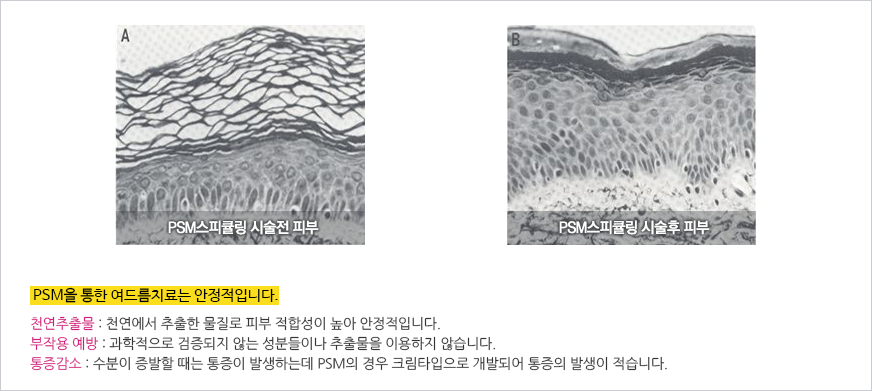
PSM spiculing principles and changes by stage
Conventional peels remove surface layers physically or chemically. PSM spiculing is intended to stimulate skin turnover so accumulated surface cells are shed as the skin renews.
PSM spiculing features
Aims to reduce excess sebum that contributes to acne.
Spicules act within the skin with the aim of promoting turnover and earlier shedding of accumulated surface cells.
Aims to manage bacterial activity as part of treatment and maintenance; recurrence can still occur.
Selected ingredients aim to calm inflammatory skin responses.
Aladdin Peel vs PDT vs PSM Spiculing
| Product name | Claro Peel / Aladdin Peel | PDT | PSM Spiculing |
|---|---|---|---|
| Ingredient composition | Spicules 20–30%; physical ingredients such as volcanic ash 70–80% | Photosensitizer | Spicules 100% + nano-bio ingredients |
| Treatment principle | Physical or mechanical peeling | Photosensitizer-based effects on sebaceous glands to manage sebum | Ingredient release over 72 hours, supporting renewal followed by shedding |
| Potential applications | Red acne marks and overall tone, with a cosmetic-care focus | People with difficult-to-control sebum | Inflammation or excess sebum, including sensitive acne-prone skin after suitability assessment |
| Features | Experience from clinical use | Extensive clinical use and familiarity | Attention to comfort and management of oily or inflammatory acne |
PSM spiculing process
- Deep cleansing
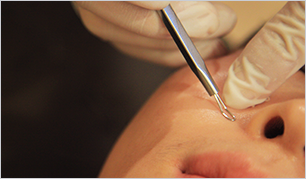
- Acne extraction
- Spiculing treatment
- Post-treatment soothing mask
- Recovery cream and completion
PSM spiculing may be considered for
- Those with persistent or inflammatory acne
- Those seeking timely acne care
- Those hesitant about photosensitizers or acne medication
- Those with sensitive skin, after careful assessment
PSM spiculing precautions
- Cleansing may begin 24 hours after treatment. Use gentle, light movements and follow your clinician’s instructions.
- Please limit UV exposure and apply sunscreen when going outdoors.
- Please avoid activities that cause substantial sweating or heat, such as gym workouts and running, during the advised period.
- Redness, swelling, or itching may occur for about 2–3 days, with individual variation.
- Drink fluids appropriately and use suitable moisturizers to help manage dryness.
Laser care for dark post-acne marks
May be considered for pigmentation spots and overall tone alongside acne management.
Medication

Oral and/or topical medication may be prescribed when needed.
| Antibiotics | Sebum-regulating medication (retinoids) | Hormonal treatment |
|---|---|---|
| Antibiotics may act against acne-associated bacteria and reduce inflammation. | Isotretinoin, known by brands including Roaccutane, is a vitamin A derivative that can reduce sebum, abnormal follicular keratinization, and inflammatory acne processes. It requires careful prescribing and monitoring because of potentially serious adverse effects. | Hormone-related options selected after medical assessment |
* Medication can cause adverse effects. The clinic director reviews your history and discusses risks before prescribing.
Acne can recur even after treatment.
- 01An efficient treatment plan
- 02Reasonable treatment costs
- 03Supporting skin firmness
- 04Recurrence management
CHECK · MY SKIN
A skin check: could a consultation help?
- I frequently develop spots.
- My skin looks red and uneven.
- I flush easily after even a little alcohol.
- I notice blackheads in my pores.
- The tip of my nose becomes noticeably red.
Plan Me offers ongoing maintenance guidance after treatment to help manage the possibility of acne recurrence.
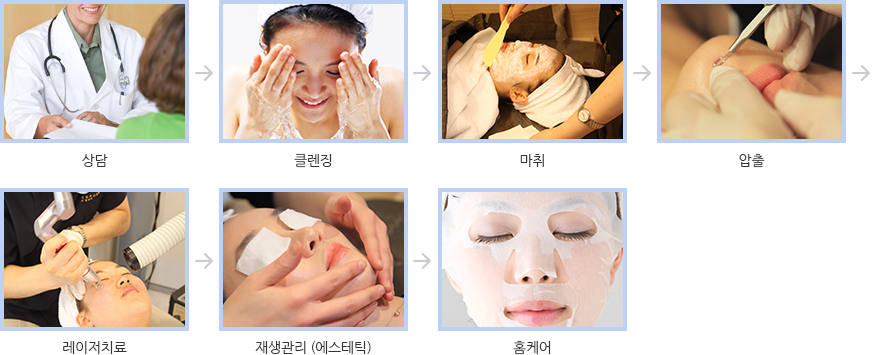
Acne treatment process
- 01
Consultation
- 02
Cleansing
- 03
Acne extraction
- 04
Laser treatment
- 05
Recovery care (aesthetic care)
- 06
Precautions
- 07
Home care
The key consideration is guidance on daily habits and recurrence management. We assess sebum, comedones, and inflammation to combine appropriate extraction, peeling, and light-treatment steps.
Care after treatment
- Please apply sunscreen when outdoors.
- Please avoid excessive cleansing.
- Please maintain adequate sleep as part of a balanced routine.
- Please reduce alcohol, smoking, and stress where possible.
1. Plan Me’s approach to acne care
For structured care, Plan Me uses JANUS skin imaging before treatment to help assess concerns and select a suitable program.
2. What is JANUS?
JANUS is a facial skin-analysis system using a 1-megapixel camera and three light sources—standard, polarized, and ultraviolet—to show features that may be difficult to see unaided. Images and measurements help explain skin findings clearly during consultation.
JANUS: three light sources
- Standard light
- Texture, pores, wrinkles, and contours
- Polarized light
- Pigmentation, acne, and acne marks
- Ultraviolet light
- Sebum, porphyrins, pigmentation, and surface buildup
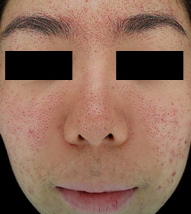
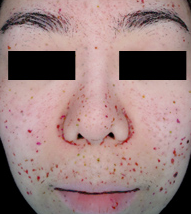
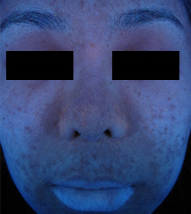
- JANUS assessment areas
- Skin texture, pores, wrinkles, pigmentation, acne, dead skin, sebum, and related concerns
- Assessment time
- 5–10 minutes
- Assessment fee
- Consultation
- Results
- Results available promptly
Scar Treatment
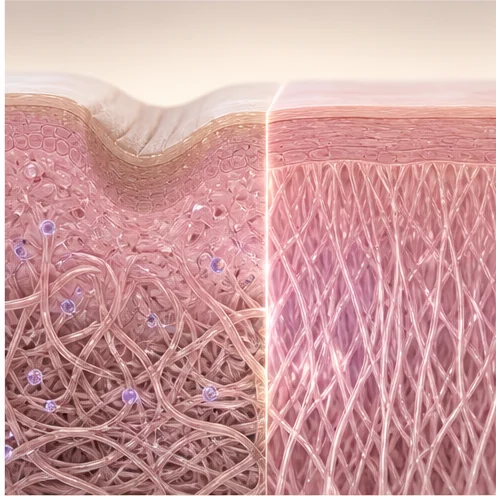
We assess scar depth and shape and the skin’s recovery capacity to tailor laser, radiofrequency, and recovery care.
PROGRAM GUIDEComplete scar treatment detailsExplore the existing detailed images, explanations, and videos in order
PROGRAM DETAIL
Scar TreatmentDetailed information
Key principles and treatment approaches are explained by topic.
Specific methods and the number of sessions are determined after medical assessment.
Plan Me pore and scar treatment
Plan Me tailors care according to JANUS skin-assessment findings. Depending on the diagnosis, options such as Lotus II, Floracel, EGF care, and Auto MTS may be combined to pursue individual treatment goals.
- 01
Careful skin assessment
- 02
A range of treatment options
- 03
Years of treatment experience
- 04
Patient-focused treatment goals
Lotus II
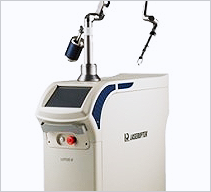
Lotus II is a 2940 nm laser with resurfacing, long-pulse, and fractional modes. Zoom and fractional handpieces allow depth and coverage to be adjusted to the area. Treatment creates controlled effects in the skin to support remodeling and may be used for selected acne scars, pigment lesions, fine lines, moles, warts, or skin tags after diagnosis. Recovery and adverse effects vary.
- Treatment information
- Treatment after topical anesthetic; total time about 40 minutes–1 hour
- Discomfort
- May be limited
- Flaking
- Flaking may occur for 2–3 days.
- Effects
- Scars / Pores / Firmness / Wrinkles / Selected moles, warts, vascular lesions, and milia after assessment
Lotus II features
- Allows precise treatment of small areas.
- Depth can be adjusted according to the area and condition.
- Full-face treatment may take about 15–20 minutes.
- Discomfort may be limited, with appropriate preparation and settings.
- Settings are chosen to limit pigmentation risk, though pigment changes can still occur.
Lotus II treatment goals
- Scars
- Pore appearance
- Wrinkles
- Gentle resurfacing
- Freckles, melasma, and pigmentation spots
Floracel
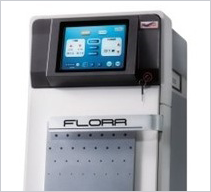
Floracel is a radiofrequency microneedling device that delivers energy through multiple fine needles to the dermis to stimulate collagen remodeling. It may be considered for selected scars, deeper lines, pores, and other skin concerns. Surface injury, pain, pigment changes, and other complications remain possible, so settings and suitability require assessment.
- Treatment information
- Treatment after topical anesthetic; total time about 40 minutes–1 hour
- Discomfort
- May be limited
- Flaking
- Flaking may occur for 2–3 days.
- Effects
- Scars / Pores / Firmness / Wrinkles / Selected moles, warts, vascular lesions, and milia after assessment
Floracel features
- May address selected concerns involving pores, scars, deeper lines, acne, or pigmentation according to the diagnosis.
- Radiofrequency is delivered to the dermis through microneedles. Recovery, cleansing, and makeup timing depend on skin response and your clinician’s advice.
- Aims to stimulate dermal collagen and elastin remodeling to support firmness and soften wrinkles.
- Targeted radiofrequency may affect sebaceous tissue and collagen remodeling, with possible changes in pore appearance.
- Settings are chosen to limit pigmentation risk, though pigment changes can still occur.
Floracel treatment goals
- Scars
- Pore appearance
- Wrinkles
- Gentle resurfacing
- Freckles, melasma, and pigmentation spots
EGF
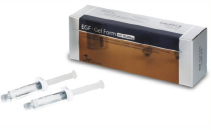
EGF (epidermal growth factor) is involved in cell-growth and repair processes. A suitable topical EGF product may be considered as part of post-laser skin care after assessing the product and skin condition. Benefits vary and do not guarantee faster healing or stronger laser effects.
- Treatment information
- Applied to the treated area after laser treatment for about 20–30 minutes
- Discomfort
- Usually minimal
- Recovery time
- Daily activities may be possible immediately afterward
- Effects
- Scars / Pores / Firmness / Wrinkles / Irritation care / Skin tone
EGF care features
- Supporting recovery after laser treatment
- Soothing skin affected by treatment
- Supporting cellular repair processes
- Skin-tone and texture care
- Supporting the skin barrier
EGF care goals
- Pore appearance
- Acne care
- Wrinkles
- Skin recovery
- Skin-tone care
Auto MTS
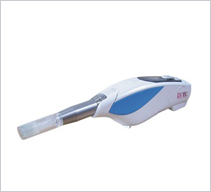
Auto MTS uses microneedles to create tiny skin channels, with the aim of supporting remodeling and the delivery of suitable products. Device operation may create approximately 40,000–60,000 microchannels, depending on settings and area. Channel counts do not directly predict treatment benefit, and products used with microneedling require careful selection.
- Treatment information
- Treatment after topical anesthetic; total time about 40 minutes–1 hour
- Discomfort
- May be limited
- Recovery time
- Daily activities may be possible immediately afterward
- Effects
- Pores / Acne / Acne scars / Fine lines / Firmness / Skin tone / Texture
Auto MTS features
- Creates controlled micro-injuries with the aim of stimulating collagen without removing the entire epidermis.
- Uses the skin’s natural wound-healing response.
- Creates multiple microchannels in a short period; a 5-minute setting may produce about 250,000–300,000 microchannels, depending on the device and settings.
- Microneedling can cause adverse effects. Please discuss product suitability, infection risk, pigmentation, and other precautions before treatment.
- Sessions may be brief and straightforward.
- Aftercare includes sun protection and attention to skin sensitivity.
Auto MTS treatment goals
- Scars
- Pore appearance
- Wrinkles
- Skin recovery
- Skin-tone care
Plan Me pore and scar treatment process
- 01
Consultation
- 02
Cleansing
- 03
Anesthesia
- 04
Extraction
- 05
Laser treatment
- 06
Recovery care (aesthetic care)
- 07
Home care
Post-treatment precautions
- Please avoid rubbing the treated area afterward.
- Small crusts may form. Please allow them to shed naturally.
- Please avoid high-temperature environments such as saunas after treatment when possible.
- Please avoid vigorous massage, including deep facial massage, over the treated area.
- Please avoid alcohol and smoking for 2–3 days after treatment.
Plan Me’s approach to pore and scar care
For structured care, Plan Me uses JANUS skin imaging before treatment to help assess concerns and select a suitable program.
What is JANUS?
JANUS is a facial skin-analysis system using a 1-megapixel camera and three light sources—standard, polarized, and ultraviolet—to show features that may be difficult to see unaided. Images and measurements help explain skin findings clearly during consultation.
JANUS: three light sources
- Assessment areas
- Skin texture, pores, wrinkles, pigmentation, acne, dead skin, sebum, and related concerns
- Assessment time
- 5–10 minutes
- Assessment fee
- Consultation
- Results
- Results available promptly
Hair Removal
We assess skin tone, hair thickness, and growth cycles to plan area-specific laser settings and intervals.
PROGRAM GUIDEComplete hair-removal detailsExplore the existing detailed images, explanations, and videos in order
PROGRAM DETAIL
Hair RemovalDetailed information
Key principles and treatment approaches are explained by topic.
Specific methods and the number of sessions are determined after medical assessment.
Individual treatment planning Premium Laser Hair Removal
There are many choices for hair-removal treatment.Plan Me focuses on a considered, individualized approach.
We discuss more than price when planning your care.
Explore Plan Me’s approach to laser hair removal.
- Tens of thousands of
treatment experiences - Thorough
hygiene practices - Return-visit rate
Over 90% - Patient satisfaction and
attention to treatment comfort
What is laser hair removal?

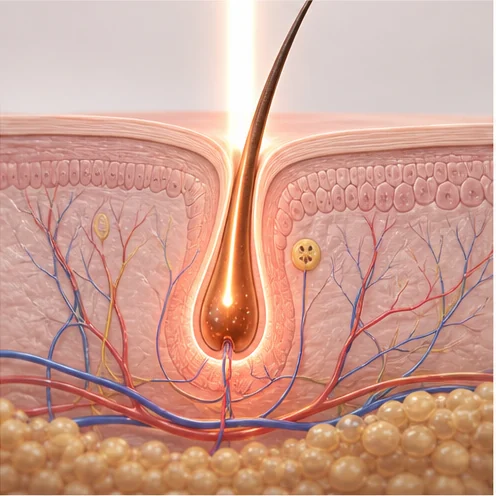
Hair grows in repeated cycles of active growth, transition, and rest rather than all at once. Laser hair removal works best on hairs in the active growth phase. Energy is selectively absorbed by melanin in the hair, damaging targeted follicular structures to reduce future growth.
- Treatment time
- 5–10 minutes; full-body or larger areas may take longer
- Treatment interval
- Often 5 or more sessions at about monthly intervals, depending on the area and hair thickness
- Treatment areas
- Underarms; face, including forehead, upper lip, chin, and sideburns; arms; calves; thighs; bikini line; and perianal area
- Treatment method
- Selectively targets hair follicles with attention to limiting surrounding skin injury
Long-term hair reduction
Plan Me draws on experience in laser hair reduction.
Plan Me hair-removal features
Laser hair removal performed by a physician
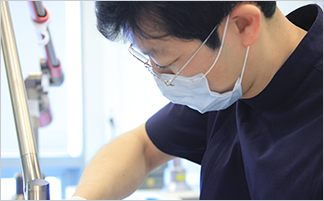
Treatment settings should reflect skin tone, hair density, and the area being treated to balance comfort and results. At Plan Me, Dr. Lee Seung-hwan personally performs the procedure, drawing on hair-removal experience.
Patient-focused laser hair removal at Plan Me
Dr. Lee Seung-hwan uses experience and suitable devices to plan efficient treatment with attention to comfort, from the underarms to delicate areas such as the upper lip, hairline, and bikini line. Results vary.
- Brief sessions with attention to comfort
- Tailored treatment for fine and coarse hair
- Showering and makeup may be possible the same day
A long-pulse 755 nm laser can be used without gel. Comfort and the need for anesthesia vary with the area, settings, skin, and hair characteristics.
Laser hair-removal goals
- Sessions can be brief with a straightforward procedure.
- Discomfort is usually brief and varies individually.
- Aims for progressive hair reduction.
- Selectively targets follicles while measures are taken to protect surrounding skin.
- Irritation or folliculitis can occur; the risk differs between methods and individuals.
Individual assessment and thorough equipment disinfection
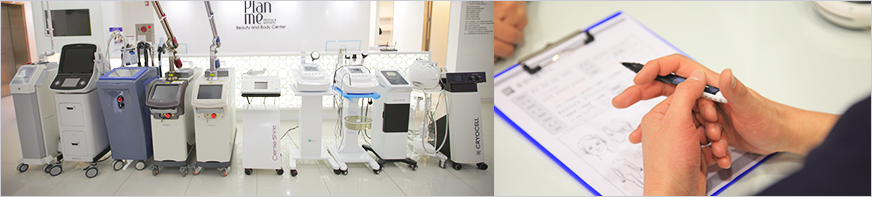
Evening appointments for working patients
According to the hours currently listed on the site
- Monday · Tuesday · Friday
- 10:30–19:00
- Wednesday
- 15:00–19:00
- Thursday
- 10:30–20:30 (evening appointments)
- Saturday
- 10:30–15:00
- Sundays & public holidays
- Closed
Treatment areas
Swipe left or right to view all treatment areas.
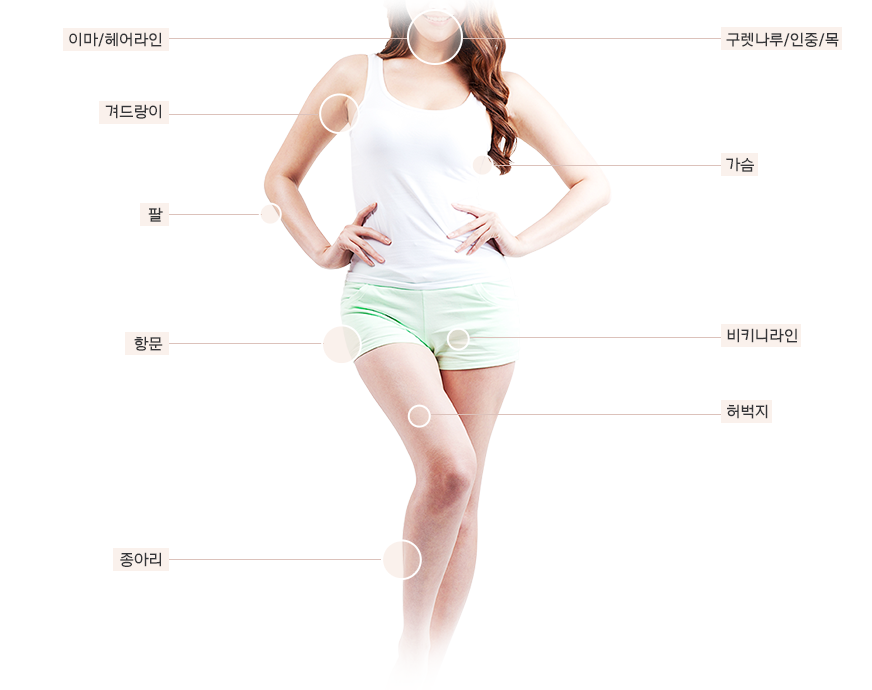
- Forehead · Hairline
- Sideburns · Upper lip · Neck
- Underarms
- Chest
- Arms
- Bikini line
- Perianal area
- Thighs
- Calves
Hair-removal treatment process
Plan Me aims to provide carefully planned, effective treatment and patient satisfaction.
- 01
Medical record and consultation
- 02
Topical anesthetic
- 03
Treatment
- 04
Soothing care & Precaution guidance
Post-treatment precautions
- Please continue using sunscreen between sessions.
- Showering and makeup may be possible the same day, but please avoid heat and irritation from saunas or steam rooms.
- Larger treated areas may become dry; a suitable moisturizer can help.
- The next session is planned according to regrowth and the clinician’s assessment.
- Redness may occur for about 1–2 days and usually settles naturally.
PLEASE NOTE
Planning follows consultation
- Suitability and specific methods vary with individual condition.
- Products, devices, amounts, and energy settings are determined after medical assessment.
- Recovery and duration may vary between individuals.
- Please tell your clinician about medical conditions, medications, and allergies before treatment.
This guidance provides general treatment information and does not replace an individual diagnosis.
PLAN ME · DETAIL GUIDE
Program details
Explore treatment principles, suitability, the process, and precautions. Your actual treatment plan is determined after a thorough consultation and assessment.
PLAN ME · CARE PROGRAM
Melasma & Pigmentation Care
- Visible effects
- Melasma&Pigmentation, vascular concerns, hair removal, and firmness
- Treatment time
- Effects
Melasma is brown facial pigmentation with irregular borders, often appearing in women in their 20s and 30s.
01 Areas · 02
Causes
Freckles are small pigmented spots caused by increased melanin production, commonly appearing on sun-exposed areas such as the face, neck, and shoulders. The pigment is located in the epidermis.
Pigmentation spots
Cellec features
Built-in cooling and temperature control support comfort during Cellec treatment, but pain, skin injury, and pigment changes remain possible. Energy and the interval between sessions, including whether a 7-day interval is appropriate, are selected after assessment. Lower energy can help manage irritation but does not eliminate hypopigmentation or post-inflammatory hyperpigmentation.
IPL (P-nain)
Plan Me melasma&and pigmentation treatment process
1. Plan Me’s approach to melasma&For structured pigmentation care, Plan Me begins with skin assessment using
PLAN ME · CARE PROGRAM
Acne Care
- Treatment time
- Treatment interval
What is acne?
Acne can develop when excess sebum and skin-cell buildup obstruct follicles and inflammation follows.
Because acne has multiple causes, treatment should be tailored to the person’s skin and acne type. Care aims to manage clogged pores, sebum, bacterial activity, and inflammation without unnecessary irritation
as part of an individualized plan. PDT uses a light source such as Dermalight and a photosensitizer for selected inflammatory or persistent acne. Concentration and application time are adjusted to acne severity and skin condition to balance response and tolerability
Aqua Peel features
May be considered across different skin types after assessing suitability.
Skin tone and sebum may improve after a session; responses vary.
- Higher-strength GA peels, such as 30% or above, require medical supervision. At Plan Me Clinic, the clinic director personally provides the procedure.
GA peeling acne-care program process
PSM spiculing features
Sebum management: aims to reduce excess oil that contributes to acne.
Product name
Features

PLAN ME · CARE PROGRAM
Pore & Scar Care
- Recovery time
- Effects
Plan Me tailors pore and scar care according to JANUS skin-assessment findings. Depending on the diagnosis, Lotus II, Floracel, EGF care, and Auto MTS may be combined to pursue individual treatment goals.
Lotus II · Floracel · EGF · Auto MTS
01 Lotus II is a 2940 nm laser combining resurfacing, long-pulse, and fractional modes. Zoom and fractional handpieces allow the treatment to be adjusted to the area and condition.
Controlled laser effects aim to support collagen remodeling and skin recovery. Depending on the diagnosis, treatment may be considered for acne scars, pigment lesions, fine lines, moles, warts, or skin tags. Adverse effects remain possible.
1. Lotus II laser features
– Allows precise treatment of small areas.
– Depth can be adjusted according to the area and condition.
1. Floracel features
– May address selected pore, scar, deeper-line, acne, or pigmentation concerns after assessment.
– Delivers radiofrequency to the dermis through microneedles; cleansing and makeup timing depend on skin response and aftercare advice.
1. EGF care features
– Supports recovery care after laser treatment and helps soothe affected skin.
1. Auto MTS features
– Creates controlled micro-injuries to stimulate collagen without removing the entire epidermis.
– Uses the natural wound-healing response.


PLAN ME · CARE PROGRAM
Laser Hair Removal
- Treatment time
- Treatment interval
- Treatment method
- 5–10 minutes
What is laser hair removal?
Hair removal addresses unwanted body hair. Hairs do not all grow at once but pass through three stages: active growth, transition, and rest
in a repeating cycle.
Laser hair removal works best on actively growing hairs. Energy is selectively absorbed by melanin in the hair, damaging targeted follicular structures to reduce future growth.
Laser hair-removal areas (full-body or larger areas may require more time)
Plan Me hair-removal features
One: laser hair removal performed directly by a physician