
 한국어
 English
 中文
 日本語
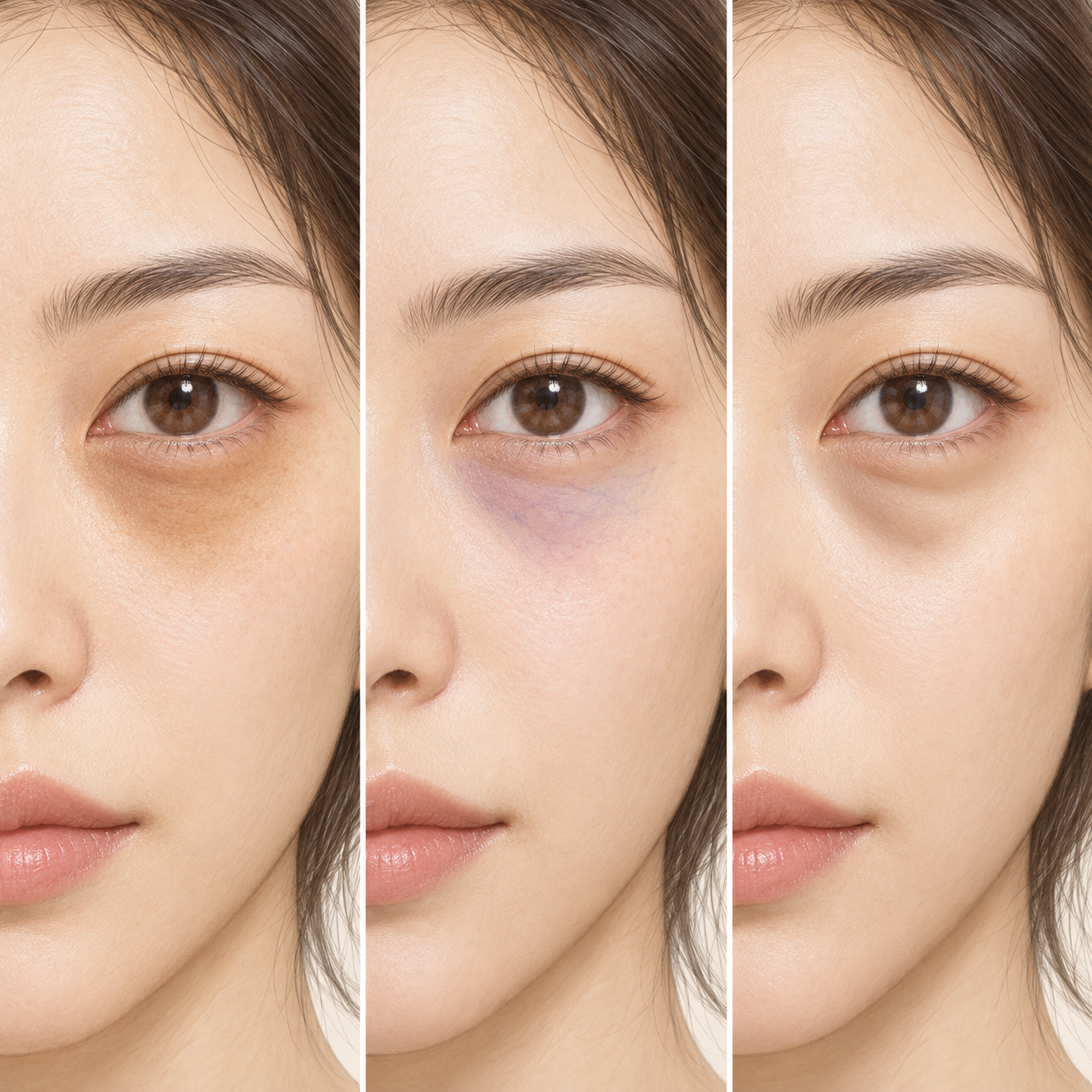
During consultations about dark circle filler, I often hear a familiar morning story: applying concealer, checking the mirror, and adding another layer. Yet under the meeting-room lights that afternoon, the under-eye area looks dark again.
Many people spend years telling themselves, “This is just how my face looks.” If you are tired of makeup becoming heavier with every layer, it may help to first understand where that darkness comes from.
Direct Answer Dark circles may be pigment-related, with a brown color; vascular, appearing blue or purple; or structural, caused by shadows from under-eye hollowness. These types can overlap. If the color remains when the under-eye skin is gently stretched, pigmentation may be involved; if it fades, shadowing is more likely. Treatments that fill hollow areas, such as filler for dark circles discussed at a dermatology consultation near Seolleung Station, mainly address the shadow type and do not remove the color itself. Because mixed causes are common, a clinical assessment is the more accurate way to check.
Dark circles are usually pigmented (brown), vascular (blue or purple), or structural (shadows from hollowing), often mixed. When you gently stretch the skin, pigment stays while shadows fade. Fillers mainly help the structural type and do not remove pigment.
Can I tell at home whether my dark circles are caused by color or shadows?
You may be able to get an initial idea. Dermatology literature describes a gentle “stretch test” to help distinguish pigmentation from shadows. In bright light near a window, if the color remains when the skin beneath the eye is gently stretched, pigmentation may be involved; if it fades, a shadow caused by hollowness is more likely.
If the purple color becomes more noticeable when stretched, visible blood vessels beneath thin skin may be involved. If you have noticed these changes yourself, that is already a useful observation to share.
As a simple guide, color that remains with stretching may suggest pigmentation, while darkness that fades may suggest a shadow.
What changes depending on whether the dark circles are brown or blue?
The color can point toward a different care approach. Brown discoloration often involves accumulated melanin, so sun protection and pigmentation care may be considered first. With a bluish color, adding volume alone may leave the color unchanged. The Mayo Clinic also lists eye rubbing, sun exposure, and age-related skin changes among possible causes. If changing concealer shades did not help, it may have been about the type of dark circles rather than your makeup technique.
The table below outlines the differences.
| Feature | Pigment-related | Vascular | Shadow-related (hollowness) |
|---|---|---|---|
| Visible color | Brown | Blue or purple | A shadow close to the natural skin tone |
| When the skin is stretched | Color remains | Purple becomes more noticeable | Darkness fades or disappears |
| Initial consultation focus | Pigmentation care | Assessment of skin thickness and visible vessels | Volume in hollow areas |
The color of the dark circles can therefore help guide the approach to care.
Which type of dark circles may benefit from filler discussed at a dermatology consultation near Seolleung Station?
Mainly the shadow-related type. Filler for dark circles uses hyaluronic acid filler to fill an under-eye hollow and reduce its shadow. However, review articles also describe cases in which the area looked darker after filler treatment.
Before recommending filler, I gently assess the skin under stretch and under different lighting to consider the contribution of color and shadow. If you have been concerned about this for a long time, I would like to help you avoid further disappointment from an approach that does not suit the cause.
Filler addresses the hollow that creates a shadow; it does not remove pigmentation.
Frequently asked questions
Can filler lighten brown dark circles?
Filler is unlikely to lighten the color itself. It works by filling a hollow to reduce shadowing, so brown pigmentation caused by melanin often remains. If shadows are also present, the overall darkness may look less noticeable. A consultation can help assess how much each factor contributes. Individual differences are considerable.
Where do you start when several types of dark circles overlap?
We usually begin with the factor that is most noticeable. For example, volume may be considered first when shadowing is the main cause, while pigmentation care may take priority when pigment is more prominent. Addressing concerns in stages may feel more manageable than trying to resolve everything at once. The appropriate order depends on your skin and can be discussed together. There is no need to rush.
Why do my dark circles remain even when I get enough sleep?
Fatigue may not be the only factor. Inherited pigmentation, thin skin, and age-related under-eye hollowness may not change much with more sleep. If your under-eye area has looked the same for months despite resting well, please do not blame yourself. It may help to have the type assessed. Understanding the cause may also make it easier to approach concealer without adding more and more layers.
Even understanding whether color or shadows are involved can make dark circles easier to approach. You can gently observe how the under-eye area changes with a light stretch in the mirror tomorrow morning. If you are still unsure, I can assess it with you personally during a consultation about filler for dark circles near Seolleung Station.
※ Advice about filler for dark circles is tailored to your skin condition and degree of hollowness. Results vary from person to person.
References
- Journal of Clinical and Aesthetic Dermatology, Periorbital Hyperpigmentation: A Comprehensive Review (2016) https://jcadonline.com/periorbital-hyperpigmentation-a-comprehensive-review/
- Mayo Clinic, Dark circles under eyes — Causes https://www.mayoclinic.org/symptoms/dark-circles-under-eyes/basics/causes/sym-20050624