
 한국어
 English
 中文
 日本語
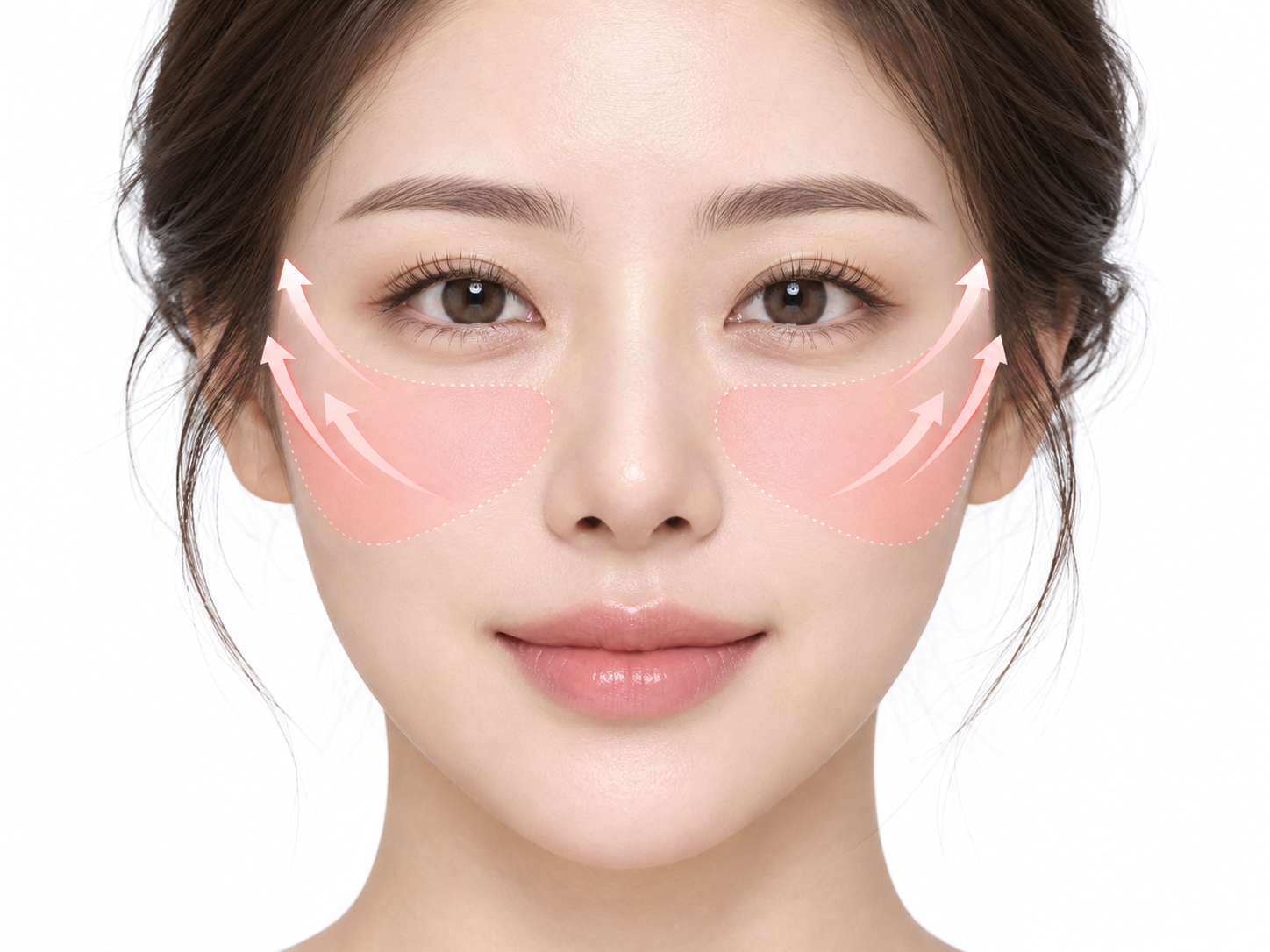
Some faces have fullness above the nasolabial folds, a flatter front cheek, and a continuous shadow beneath the eyes. Skin laxity and a lack of volume may both contribute to this appearance. When considering midface lifting or other midface treatments, it is therefore helpful to assess where the shadow forms and which tissues contribute to it before focusing on a device name.
📌 At a glance
- Midface lifting is a general term for treatments intended to improve reduced firmness and a sagging appearance in the central face. It does not refer to one specific device or procedure.
- Similar-looking sagging can have different causes, including skin laxity, volume loss, under-eye fat bulging, and swelling.
- Lifting and volume replacement aim for different changes. The approach should be matched to the cause first.
Contents
- What is midface lifting?
- Similar-looking sagging can have different causes
- Choosing midface treatment according to the cause
- What to discuss at a consultation and the main risks
- Frequently asked questions
- Conclusion
1. What is midface lifting?
Midface lifting is a general term for treatments intended to improve reduced firmness and a sagging appearance in the central face. It is not a standardized device name or a single procedure. This article focuses on the area from beneath the eyes through the front cheeks to above the nasolabial folds.
Midface treatment is a broader term that includes firmness treatments and volume replacement. During a consultation, the goal is made more specific, such as addressing skin laxity or improving the front-cheek contour.
Nonsurgical lifting may be considered when mild skin laxity is the main cause. If substantial volume loss or severe tissue descent is the main problem, another treatment may be needed, or expectations may need to be more modest. The American Academy of Dermatology also explains that nonsurgical tightening produces more limited changes than surgery, and that the degree of sagging matters when assessing suitability.[2]
2. Similar-looking sagging can have different causes
Changes in the skin, fat, ligaments, and bone all affect facial appearance.[1] Similar-looking sagging may therefore lead to different consultation priorities.
| Observed appearance | Possible cause to assess | Consultation focus |
|---|---|---|
| Loose cheek skin and heaviness above the nasolabial fold | Descent of skin and soft tissue | Degree of laxity and realistic expectations for lifting |
| A flat central front cheek and a deeper under-eye border | Insufficient local volume and structural support | Whether volume replacement is needed |
| Under-eye fullness with darkness immediately below it | Fat bulging and shadowing at the boundary | A separate assessment of under-eye anatomy |
| Fullness differs between morning and evening | Swelling | Its recurring pattern and cause |
It is difficult to choose a treatment from photographs alone. An examination is needed to distinguish actual laxity from hollowness.
3. Choosing midface treatment according to the cause
| Main cause | Approach that may be considered | Expected scope and limitations |
|---|---|---|
| Skin laxity | Thermal-energy treatments such as ultrasound or radiofrequency | Energy delivery and treatment scope vary between devices |
| Insufficient front-cheek volume | Contour enhancement with filler or another suitable approach | The aim is to soften localized hollows and boundaries, rather than physically lift tissues |
| Both hollowness and sagging | Address the main cause first and review progress | Volume in hollow cheeks may need to be preserved |
| Severe sagging | Comparison with a surgical assessment | Nonsurgical treatment may provide only limited change |
| Under-eye bulging or swelling | A separate assessment of under-eye anatomy | This may need attention before midface lifting |
When skin laxity is the main issue, treatments using thermal energy, such as ultrasound or radiofrequency, may be options. However, devices differ in how they deliver energy and where they can be used, so the label “midface lifting” does not imply identical effects. The approach needs to suit your skin and the change you want.
When insufficient front-cheek volume is the main issue, contour enhancement with filler or another approach is assessed separately. The aim is to soften local hollowness and transitions. Adding volume with filler is not the same as moving a broad area of tissue upward, so it should not be expected to pull the entire nasolabial area tight.
When hollowness and sagging occur together, the main cause can be addressed first and progress reviewed. Volume in hollow cheeks may need to be preserved, while more severe sagging calls for comparison with a surgical assessment. If under-eye bulging or swelling is present, assessing that concern may take priority.
4. What to discuss at a consultation and the main risks
What is assessed during the examination
- Skin elasticity, front-cheek support, and fat distribution
- Under-eye bulging and asymmetry
- Facial movement, weight changes, and changes in swelling
Age alone does not determine the treatment.
Information to share at your consultation
- Previous filler, thread lifting, surgery, or energy-based treatment, including any side effects
- Inflammation or wounds, and whether you are pregnant or breastfeeding
- Current medications and any implanted medical devices
If the condition of a previous treatment is unclear, assessment is needed before further treatment.
Risks to be aware of
Energy-based treatments may cause redness, swelling, or pain. Risks such as burns or altered sensation should be discussed for the specific approach being considered. Filler may cause bruising, swelling, or nodules and, rarely, vascular occlusion, skin necrosis, or vision damage.[3]
⚠️ Symptoms requiring immediate contact
If you experience sudden vision changes, severe pain, or skin that becomes pale or mottled, notify your medical team immediately and seek emergency medical care.
5. Frequently asked questions
Q1. Does midface lifting shorten the face?
Nonsurgical lifting does not shorten the bones. Facial proportions may look different as sagging or shadows soften, but an actual reduction in length should be distinguished from a change in appearance.
Q2. If I have little cheek fat, is filler more suitable than lifting?
The decision is not based on fat volume alone. Low volume and skin laxity can occur together, so an examination is needed to distinguish areas to treat from areas to preserve.
Q3. Do deep nasolabial folds mean I need a midface treatment?
Nasolabial folds involve not only tissue descent but also skeletal structure, volume, and facial expression. It is important to clarify which aspects a midface approach may change and which limitations may remain in the fold itself.
Q4. Do lifting and filler always have to be combined?
No. One treatment suited to the cause can be considered first. If treatments are combined, the reason and additional expected benefit should be clear, along with the burden and risks.
Q5. Do I need to decide on treatment on the day of the consultation?
There is no need to have treatment that day. If the cause is unclear or swelling or inflammation is present, assessment and observation may be chosen first.
Conclusion | Midface treatment should match the cause and the goal
Midface lifting is assessed primarily for reduced firmness and tissue descent, while volume replacement is assessed for localized hollowness. When the two appear together, deciding which change is needed first matters more than selecting a device or amount.
If you are considering midface treatment in Seolleung, please share the following during your consultation at Plan Me Clinic:
- The area that concerns you most
- Swelling that changes throughout the day
- Your previous treatment history
- The appearance you would like
After discussing options suited to your current condition, their limitations, and the recovery involved, you can decide on the extent of treatment needed.
References
Reviewed on October 7, 2026. Reference [1] concerns anatomical changes, [2] addresses the suitability and limitations of nonsurgical tightening, and [3] provides filler safety information. These sources do not demonstrate the results of a particular clinic.
[1] Treating Aging Changes of Facial Anatomical Layers with Hyaluronic Acid Fillers
https://pmc.ncbi.nlm.nih.gov/articles/PMC8405095/
[2] American Academy of Dermatology, Many ways to firm sagging skin
https://www.aad.org/public/cosmetic/younger-looking/firm-sagging-skin
[3] U.S. FDA, Dermal Fillers (Soft Tissue Fillers)
https://www.fda.gov/medical-devices/aesthetic-cosmetic-devices/dermal-fillers-soft-tissue-fillers