
 한국어
 English
 中文
 日本語
“Doctor, I thought my under-eyes would look smoother, but they look uneven instead. Is this normal?”
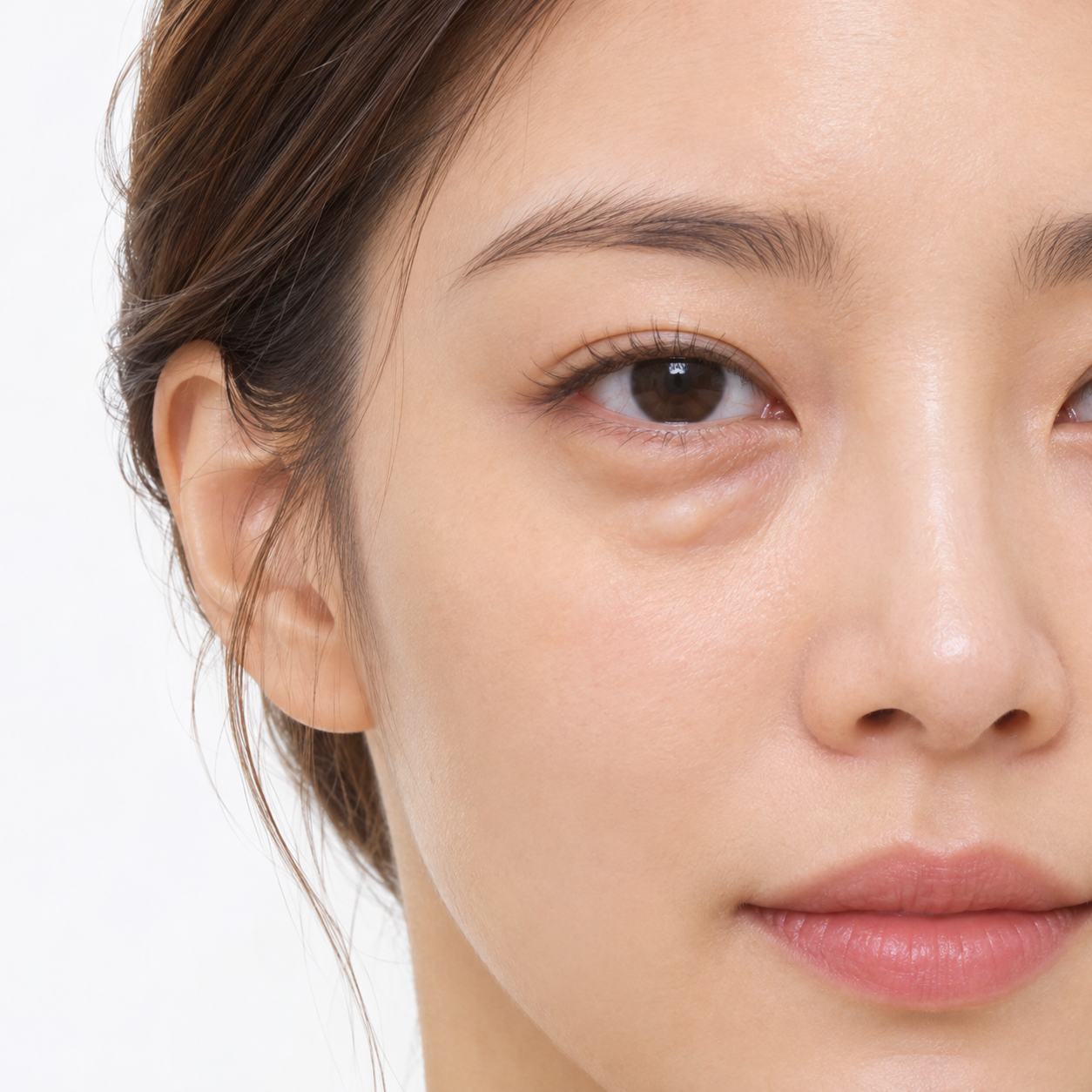
Some people become concerned when they look in the mirror a few days after under-eye filler.
You had the procedure to address under-eye hollowness, so seeing new raised areas or noticing that the two sides look different can understandably be worrying.
Under-eye skin is particularly thin, and small changes are easy to notice. Swelling that might be inconspicuous elsewhere can look like an uneven contour beneath the eyes.
Will these changes settle naturally over time, or is the filler positioned incorrectly?
This is a question people exploring under-eye filler near Seolleung Station may also have. Today, I will explain what to look for during recovery.
To begin with, unevenness immediately after under-eye filler can be caused by swelling, which often subsides over approximately one to two weeks. However, not every irregularity is swelling. If it remains over time, its cause should be assessed.
1. How long can the under-eye area look uneven after filler?
Immediately after treatment, the appearance reflects both the volume of the filler and tissue reactions and swelling along the path of the needle or cannula.
The American Academy of Dermatology (AAD) also advises that reactions such as redness, swelling and bruising after filler generally settle within 7–14 days.
Individual experiences do vary.
If your under-eye skin is naturally thin or tends to swell easily, even a small change may be more noticeable.
Hyaluronic acid, which is commonly used in under-eye fillers, also attracts water. The area can therefore initially look fuller than expected or feel uneven on the surface.
Some people notice more under-eye swelling on waking that decreases as the day progresses.
This does not mean that every uneven contour should simply be left to settle.
What I consider important is whether the swelling is decreasing or a particular area remains persistently raised.
The first one to two weeks provide an opportunity to assess recovery, but unusual symptoms or increasing swelling should be checked regardless of how much time has passed.
2. What should be assessed if unevenness persists beyond the initial settling period?
If a particular area remains raised around two weeks after under-eye filler, causes other than temporary swelling should also be considered.
The appearance of filler beneath the eyes depends on tissue thickness, fat distribution and tear-trough depth.
Filler that sits too superficially or is concentrated in one area can create an uneven surface.
The under-eye area may sometimes also look bluish.
The bluish appearance associated with superficially placed hyaluronic acid filler interacting with light is commonly called the Tyndall effect.
However, a blue appearance is not always caused by filler. Visible blood vessels or pre-existing dark circles may also contribute.
| Finding | Possible appearance | What to assess |
|---|---|---|
| Temporary swelling | General under-eye fullness that changes over time | Whether the swelling is decreasing |
| Filler lump or protrusion | A persistent raised area or palpable lump in a particular location | Filler location and distribution |
| Bluish discoloration | A blue hue visible through the under-eye skin | Filler depth, skin thickness and blood vessels |
| Persistent edema | Recurrent swelling beneath the eyes or in the front of the cheek | The condition of the filler and surrounding tissues |
There is one point I would particularly like to emphasize.
Do not repeatedly press or massage an uneven area in an attempt to flatten it.
Applying pressure before knowing whether the cause is swelling or actual filler protrusion is not appropriate.
If the filler position or amount needs adjustment, a clinician should examine the area and determine the appropriate approach.
3. Does the filler need to be dissolved, and when should you return for assessment?
Uneven under-eye filler does not always need to be dissolved.
Early swelling may improve naturally over time.
However, if filler remains raised in a particular area after swelling has decreased, or produces an unnatural contour, further adjustment may be considered.
For hyaluronic acid filler, an enzyme called hyaluronidase may be considered to break down some or all of the filler, depending on the findings.
Dissolving filler also carries possible side effects, and precisely targeting only the intended area can be difficult, so careful judgment is needed.
When assessing recovery after under-eye filler, I believe it is important to look beyond the raised area itself and consider tear-trough depth, the contour connecting to the front cheek, and differences between the two sides.
Even small changes in volume beneath the eyes can affect the overall facial impression.
There are also symptoms that should always be taken seriously.
Increasing pain, skin turning white or a net-like pattern of discoloration after treatment requires assessment for possible vascular complications.
Blurred vision or any change in eyesight may be an emergency and requires immediate care at an emergency medical facility.
These are not symptoms to observe while waiting for two weeks to pass.
Frequently asked questions after under-eye filler
Q. My under-eyes look more swollen every morning after filler. Is that normal?
Early after treatment, fluid balance and tissue swelling can make the area look fuller in the morning. However, swelling that keeps worsening or recurs over a prolonged period should be assessed by a clinician.
Q. I can feel the area where the filler was injected. Is that normal?
Swelling or the injected filler may be palpable initially. However, a persistent firm lump, particularly with pain or redness, should not automatically be considered normal recovery.
Q. Does under-eye filler always take exactly two weeks to settle?
No. One to two weeks is a general reference period for early swelling and bruising to subside, not the point at which everyone’s filler has completely settled. The area, product, amount injected and individual tissue condition all affect recovery.
With under-eye filler, a smooth transition matters as much as filling a hollow
Adding more filler to an under-eye hollow does not always produce a better result.
Without considering the boundary between the tear trough and front cheek, skin thickness and existing fat distribution, the under-eye area may look more prominent or its borders more pronounced.
If you have already had under-eye filler and are concerned about unevenness, have the current condition assessed rather than massaging it yourself or assuming it must be dissolved.
For questions about recovery after treatment at our clinic or an under-eye filler consultation, please contact the Plan Me Clinic KakaoTalk channel.
We will review your current under-eye condition and treatment history to advise on the appropriate next steps in care.
※ This article provides general medical information. Recovery and the course after treatment vary between individuals, and accurate assessment requires a consultation with a clinician.