
 한국어
 English
 中文
 日本語
Reviewed by Seung-hwan Lee, Medical Director, Plan Me Clinic
One of the main concerns people have when considering aegyo-sal filler is that their under-eyes may look excessively full.
You may want a subtle addition of volume, yet hesitate because the roll could become too thick or look unnatural when you smile.
Even small changes beneath the eyes can alter the overall impression of the face.
People with very little natural aegyo-sal may want more defined eyes, while those whose roll appears only during a smile may want a hint of volume at rest as well.
There is, however, an important point to consider.
A prominent aegyo-sal roll and natural-looking filler are not the same thing.
The existing shape of the eyes and their movement during a smile matter more than simply deciding how much volume to add.
Today, I will discuss points worth understanding before considering aegyo-sal filler.
Why the smiling face matters when planning natural-looking aegyo-sal filler
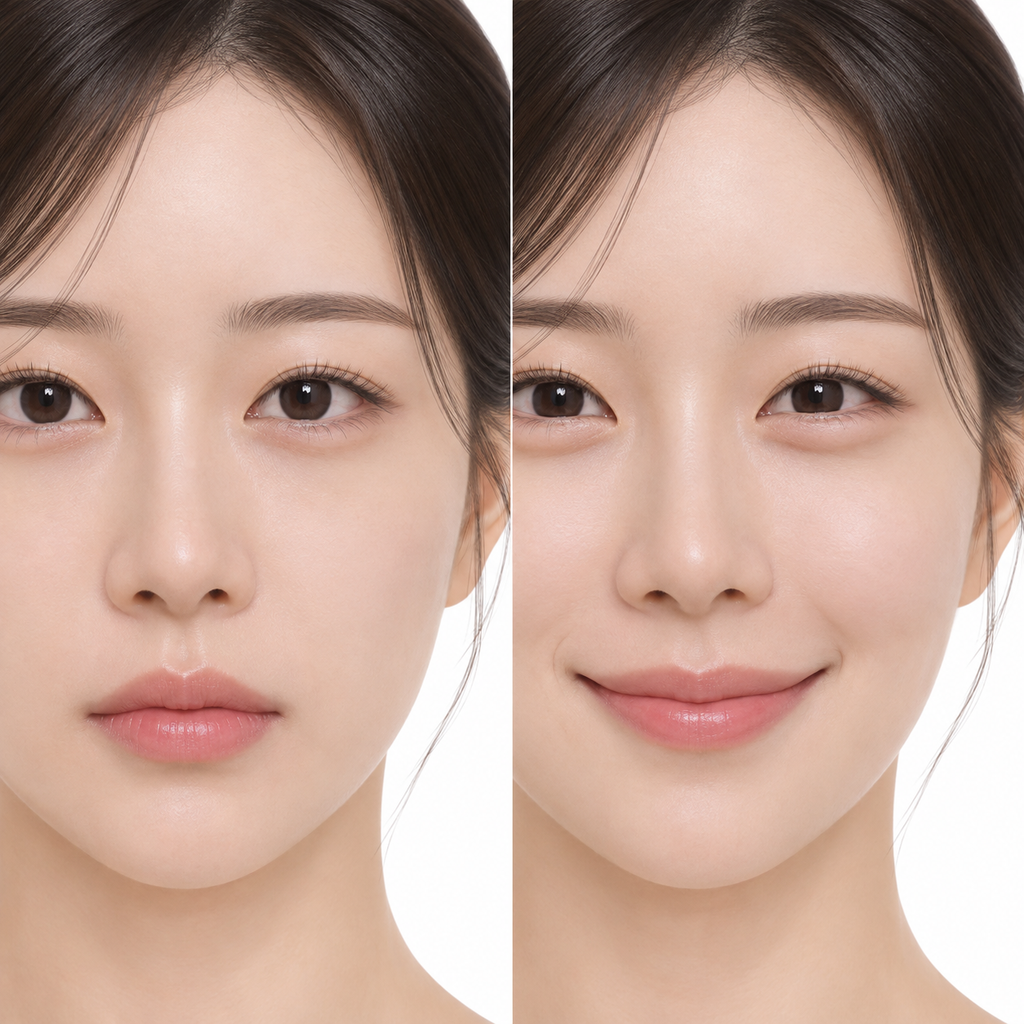
Aegyo-sal refers to the small roll of fullness directly beneath the eye.
This area contains the orbicularis oculi, a muscle surrounding the eye. Its movement when you close your eyes or smile can raise the fullness beneath the eye.
Even in people with a natural roll, its appearance differs between rest and a broad smile.
The difficulty is that volume created with filler does not always change in exactly the same way as this movement.
Filler adds volume at the injection site. An amount that looks subtle at rest may combine with the existing roll during a smile and make the under-eye area look thicker than expected.
Particular care is needed in people whose natural roll already becomes prominent when smiling.
Adding volume based only on an apparent lack of fullness at rest can make the area look heavy during a smile.
For this reason, I believe that planning aegyo-sal filler requires examining eye-area movement during a smile as well as the resting face.
Does a natural result require a small amount of filler?
When researching aegyo-sal filler, you may hear that a small amount is necessary for a natural result.
There is some reasoning behind this: under-eye skin is thin, and small changes in volume are easy to notice.
However, the smallest amount is not automatically the right answer.
A person with very little natural aegyo-sal and someone with an already prominent roll will have different volume needs.
The horizontal length of the eye, the condition of the lower-eyelid skin, and the location of the roll also need consideration.
The location where filler is placed matters too.
The under-eye area has a complex arrangement of skin, muscle and blood vessels. Appearance varies with injection location and depth, and inappropriate placement can cause lumps, edema or visible filler.
The starting point should therefore be the existing volume and which area, if any, needs support, rather than simply how many cubic centimeters to inject.
Especially in a small area like this, I believe careful assessment of balance with the eyes is preferable to aiming for a large change from the outset.
Do you need filler if you already have aegyo-sal when you smile?
This is another question worth considering.
Aegyo-sal does not have the same shape in everyone.
Some people develop a pronounced roll only when smiling, while others have relatively clear fullness even at rest.
Others show very little under-eye volume even during a smile.
Applying the same filler approach to all three situations may make a natural-looking result difficult to achieve.
| Existing under-eye appearance | What to assess before treatment |
|---|---|
| A roll appears only when smiling | Whether expression could make the volume excessively thick |
| A clear roll is present even at rest | Whether any additional volume is actually needed |
| Little roll appears even during a smile | Whether a suitable shape can be planned for the eyes and skin condition |
| The two rolls differ in shape | The cause of existing asymmetry and the possible extent of improvement |
For example, if your natural roll is already sufficiently prominent during a smile, adding filler solely because the eyes look a little flat at rest may not be the best choice.
Preserving the natural roll may look more harmonious.
Whether aegyo-sal filler is possible and whether it is necessary are separate questions.
What if the under-eye area looks too full after aegyo-sal filler?
Some people who have already had treatment may notice excessive thickness beneath the eyes when they smile.
The first point to check is how much time has passed since treatment.
Immediately after injection, tissue irritation can cause swelling. Thin skin around the eyes may make this edema more noticeable.
While swelling remains, the area can look fuller than the actual filler volume. If there are no concerning symptoms, the shape may be assessed after observing its course.
However, if a particular area remains excessively raised during a smile, or the under-eyes still look swollen at rest as time passes, other causes need assessment.
The amount and location of filler and the condition of existing tissues should be reviewed.
For hyaluronic acid filler, correction with the enzyme hyaluronidase may be considered if needed.
The extent and degree of breakdown are difficult to predict precisely, so the filler type and current condition should be established first.
Severe pain, changes in skin color or reduced vision should not be dismissed as simple swelling and require immediate medical care.
If you are considering aegyo-sal filler near Yeoksam Station
The under-eye area occupies only a small part of the face but has a substantial effect on expression.
I therefore encourage people to think of aegyo-sal filler as more than a way to make the under-eyes fuller.
At our clinic, I personally conduct both the consultation and treatment as Medical Director, assessing existing under-eye volume together with overall facial balance.
The resting shape alone is not enough to assess aegyo-sal. It is important to compare relaxed, open eyes with the smiling appearance and consider whether the desired change would suit them.
For natural-looking aegyo-sal filler, I believe that creating the desired shape is as important as recognizing where additional filler is unnecessary.
More volume beneath the eyes does not necessarily make the area more attractive.
Frequently asked questions about natural-looking aegyo-sal filler
Q. Can aegyo-sal filler be made visible only when I smile?
Filler adds volume at the injection site, so it is difficult to control it precisely so that it appears only during a smile. Visibility at rest and while smiling depends on natural movement, filler location and the amount used.
Q. Will a small amount of aegyo-sal filler look natural?
A small amount may help avoid excessive volume, but it does not guarantee a natural appearance. Eye-area anatomy, placement and product characteristics also need consideration.
Q. Are aegyo-sal filler and under-eye filler the same procedure?
Their purposes differ. Aegyo-sal filler supports the small roll directly beneath the lower eyelid, while under-eye filler is considered for hollow areas such as the tear trough. The appropriate approach depends on the condition of the under-eye area.
Q. Can excessive fullness when smiling after aegyo-sal filler become more natural?
If early swelling is the cause, the shape may change as that swelling settles. If the amount or distribution of filler is responsible, separate correction may need to be considered.
A natural-looking approach starts with understanding your own eyes
When considering aegyo-sal filler, the full rolls seen in photographs may first catch your attention.
However, a roll that suits another person will not necessarily suit your eyes in the same way.
Treatment needs differ with the natural roll, the way muscles move during a smile, and the condition of the under-eye skin.
If you want natural-looking aegyo-sal filler, consider whether it will fit your everyday expressions before focusing on how prominent it can become.
Harmonizing with your own eyes may matter more than making the roll a little fuller.
Seung-hwan Lee, Medical Director, Plan Me Clinic
※ This column provides general medical information. Filler carries risks including edema, bruising, inflammation and vascular complications. Suitability and results vary with individual eye-area anatomy and skin condition.