
 한국어
 English
 中文
 日本語
Aegyo-sal Filler in Seolleung: Can It Create Natural Fullness Only When You Smile?
The gentle roll that appears just below the eyes when you smile can sometimes make your expression look softer.
Yet when you start exploring aegyo-sal filler, you may hesitate. Even if the fullness looks attractive during a smile, you may worry that a thick line will remain beneath the eyes at rest.
If you naturally have very little aegyo-sal, it may be especially difficult to imagine how filler would look.
Aegyo-sal filler adds volume beneath the eyes and may help create a shape resembling the small roll that becomes more noticeable during a smile. However, filler itself does not appear and disappear with facial expression, so its appearance both at rest and while smiling needs consideration.
Today, I will explain the structure of aegyo-sal and the points to assess when planning natural-looking volume for anyone considering aegyo-sal filler near Seolleung Station.
Does natural aegyo-sal become fuller when you smile?
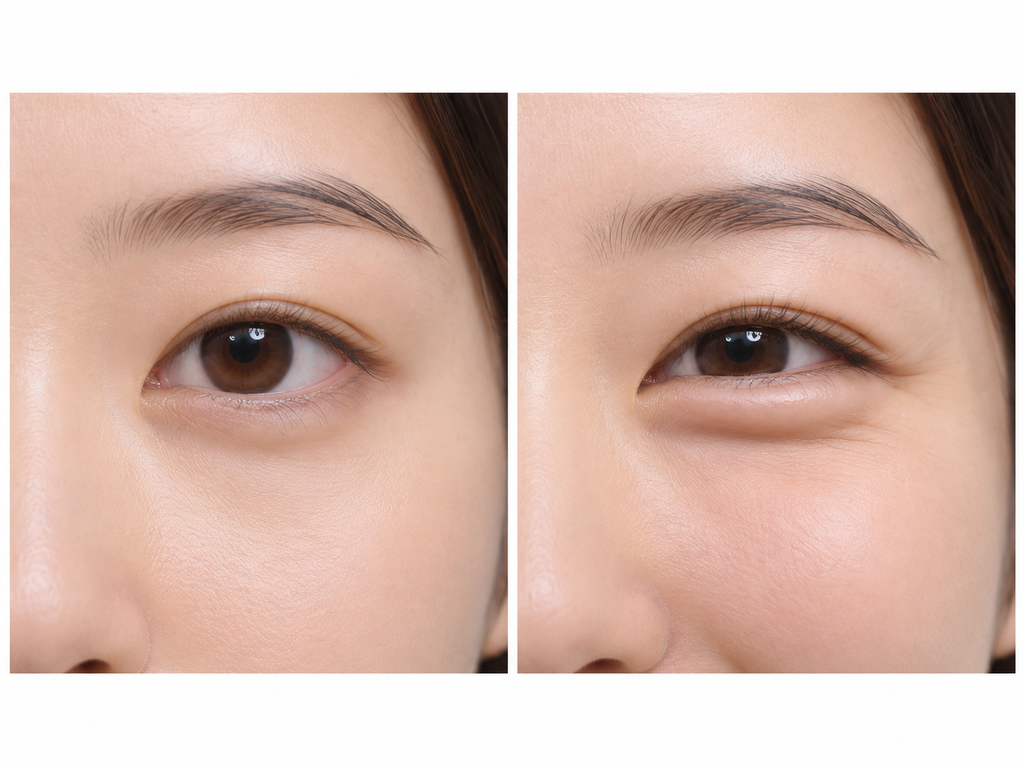
Yes, it does.
Aegyo-sal is a small roll of fullness directly below the eye, close to the lower eyelashes.
A muscle called the orbicularis oculi surrounds the eye. It works when you close or narrow your eyes, and when the eye area contracts during a smile.
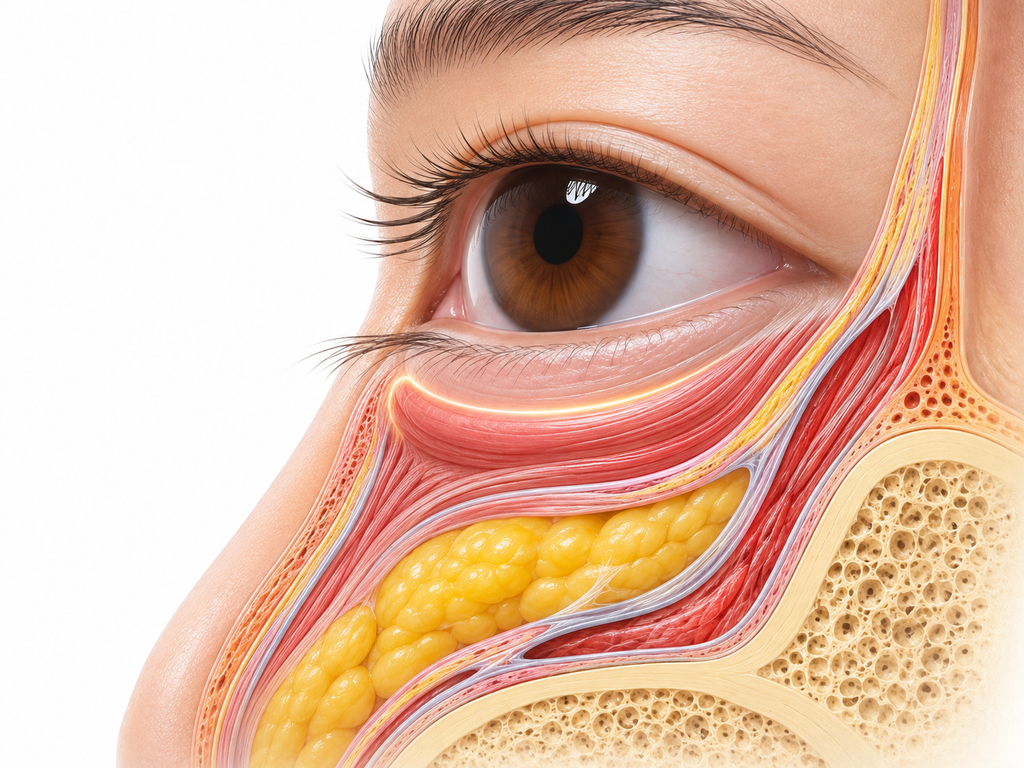
When this muscle contracts as you smile, part of the lower eyelid can rise into a fuller roll, making aegyo-sal more pronounced.
Natural aegyo-sal is therefore often subtle at rest and becomes clearer during a smile.
However, it is not the same for everyone. Some people have visible fullness even without smiling, while others show little even when they do smile.
This reflects differences in muscle development, skin thickness and eyelid anatomy.
An important point is that aegyo-sal is not simply the result of having more fat beneath the eyes.
Protruding under-eye fat and the small roll immediately beneath the eyelashes differ in location and structure.
Understanding this distinction comes before deciding which area filler might address.
Does aegyo-sal filler appear only when you smile?
This is one of the most commonly misunderstood aspects of aegyo-sal filler.
Natural aegyo-sal changes in volume with movement of the muscles around the eyes. Filler, by contrast, supports the shape by maintaining volume at the site where it is placed.
Therefore, aegyo-sal filler does not mean that fullness will appear only when you smile and disappear completely at rest.
The shape created with filler can look different with facial expression. However, natural muscle movement and filler volume do not work in the same way.
Two appearances therefore need to be considered before treatment.
The first is the under-eye area at rest.
It is important to assess whether it would create an excessively thick line or a swollen appearance even without smiling.
The second is the appearance during a smile.
When the eye muscles contract, the prominence of the roll and whether its boundary with the area below becomes overly pronounced should be assessed.
The goal is not simply to maximize volume, but to find a degree of fullness that suits the person’s existing eyes and expressions.
What makes aegyo-sal filler look natural?
People have different ideas about what looks natural.
Some want a clearly visible roll when smiling, while others want only a very subtle addition of volume.
There are nevertheless specific clinical factors to consider.
1. Where the aegyo-sal roll forms
The roll forms close to the lower eyelashes.
If filler spreads too broadly below this area, it may create a thick or swollen under-eye appearance rather than an aegyo-sal roll.
The intended location of volume should therefore be assessed first.
2. Existing under-eye fat and skin condition
The same filler approach is not appropriate for everyone who feels they lack aegyo-sal.
If under-eye fat already protrudes or there is substantial skin laxity, adding a roll can make existing fullness appear more pronounced.
In these situations, the first question is whether aegyo-sal filler is appropriate at all.
3. Changes with the eyes open and while smiling
Skin around the eyes moves continuously with expression.
Planning treatment only around an attractive shape at rest may produce more prominent fullness than expected during a smile.
Conversely, choosing the amount solely from a smiling face may leave the under-eye area looking full at rest.
A natural-looking approach therefore requires assessment of balance across several expressions, rather than just one.
Is it always better to start with a small amount of aegyo-sal filler?
Even a small difference in this roll can alter the overall impression of the eyes.
Under-eye skin is thin and its tissues are delicate, so the properties and placement of the filler matter as well as the amount.
When planning aegyo-sal filler, I believe the first consideration should be the extent of change that suits the existing anatomy, rather than simply creating more volume.
Of course, using a small amount does not guarantee a natural or safe result.
Even a small amount placed inappropriately can cause lumps or surface irregularity.
During a consultation at our clinic, we assess under-eye shape, differences between the two sides and skin condition to determine whether the desired fullness suits the anatomy.
It helps to discuss specifically whether you want to avoid noticeable fullness at rest, and how much prominence you hope to see when smiling.
For a procedure intended to make subtle changes, the intended shape matters more than simply the number of cubic centimeters used.
Are aegyo-sal filler and under-eye filler the same procedure?
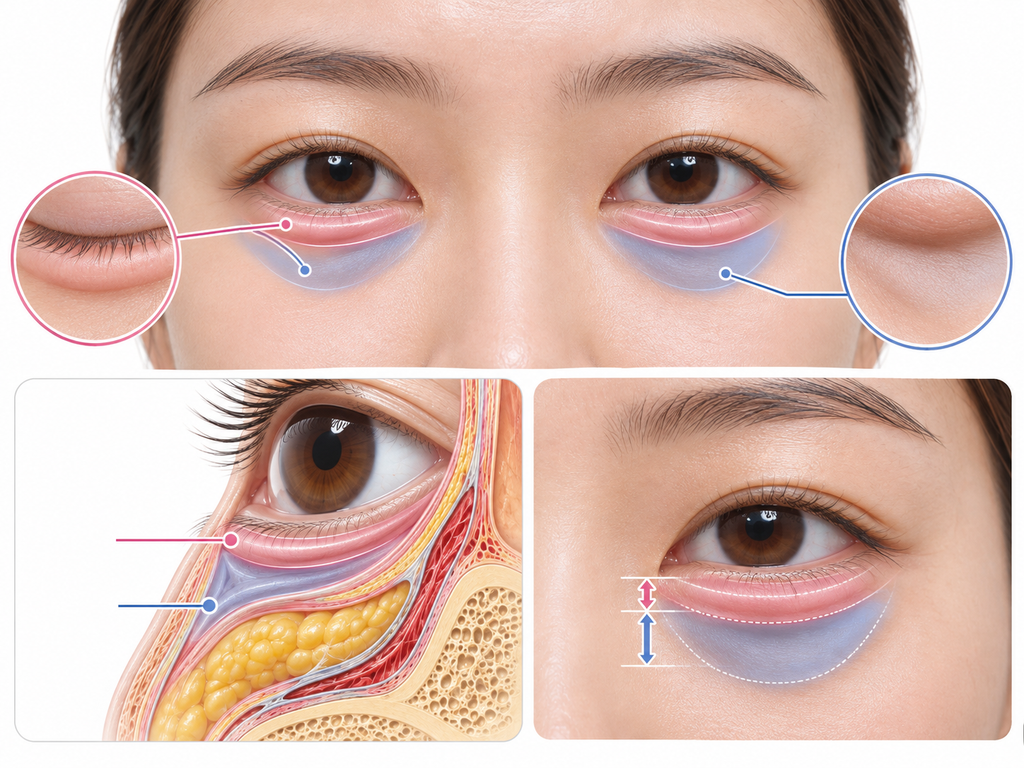
Both use filler around the eyes, but their purposes and locations differ.
Aegyo-sal filler creates a small roll close to the lower eyelashes, while under-eye filler is considered for hollows such as the tear trough.
The aegyo-sal roll sits immediately below the eyelashes, whereas the tear trough is a depression extending downward from the inner corner of the eye.
A deep tear trough can cast a shadow and create a tired appearance, which is sometimes mistaken for a lack of aegyo-sal.
Even if the under-eye area seems flat, it is important to distinguish a concern about the roll from tear-trough hollowness that needs assessment.
Although both are described as filler procedures, they address different anatomical areas.
Points to understand before planning aegyo-sal filler
Although treatment involves a relatively small area, the eye region contains multiple blood vessels and important anatomical structures.
Swelling, bruising, redness and tenderness can occur. Uneven filler distribution can also produce surface irregularity or asymmetry.
Rare but serious complications, including skin damage or vision problems caused by vascular occlusion, can also occur.
Increasing pain, skin turning white, blurred vision or any other change in eyesight after treatment requires immediate medical assessment. Vision symptoms are an emergency and require immediate emergency care.
Filler may also be unsuitable when under-eye fat protrusion or skin laxity is pronounced.
It is therefore important to assess the current eye-area condition rather than deciding on treatment solely because you want a fuller roll.
Frequently asked questions about aegyo-sal filler
Q. Can filler create aegyo-sal if I naturally have very little?
Filler may be considered to add volume when the natural roll is subtle. Suitability depends on the eye muscles and skin condition, and filler cannot reproduce exactly the movement of natural aegyo-sal.
Q. Can aegyo-sal filler be made visible only when I smile?
Treatment can be planned with the aim of greater prominence during a smile, but filler maintains some volume at rest. An appearance that occurs only when smiling cannot be reproduced precisely or guaranteed.
Q. Could aegyo-sal filler make my under-eyes look swollen?
Yes. Temporary swelling can occur immediately after treatment. The amount and position of filler, along with the condition of existing under-eye fat, can also contribute to a swollen appearance.
Q. How does aegyo-sal filler differ from dark circle filler?
Aegyo-sal filler aims to create a small roll beneath the eyelashes. Under-eye filler for dark circles is considered for shadows associated with tear-trough hollowness. If pigmentation or visible blood vessels cause the darkness, filler may not be suitable.
Assess the face at rest as well as during a smile
Natural aegyo-sal characteristically becomes more pronounced during a smile.
For this reason, many people focus on their smiling face when planning filler.
But we do not spend the entire day smiling.
There is also the appearance of the eyes at rest and during a gentle smile. Balance across these expressions matters so that the roll does not look excessively unnatural in any of them.
I encourage anyone considering aegyo-sal filler to assess their usual under-eye condition as well as thinking about the shape they want.
At our clinic, Medical Director Seung-hwan Lee personally examines eye-area anatomy and skin condition and discusses whether the desired change suits the existing eyes.
If you are exploring aegyo-sal filler near Seolleung Station, consider both your smiling appearance and your face at rest.
The natural balance of the whole face matters more than a small addition of volume on its own.
※ Filler can cause swelling, bruising, pain, asymmetry and nodules. Rarely, serious complications such as vascular occlusion or vision damage can occur. Suitability and results vary between individuals.
References
- Anatomy-Based Filler Injection: Treatment Techniques for Supraorbital Hollowness and Charming Roll. Life, 2025.
https://pmc.ncbi.nlm.nih.gov/articles/PMC11857838/ - U.S. Food and Drug Administration (FDA). Dermal Fillers (Soft Tissue Fillers).
https://www.fda.gov/medical-devices/aesthetic-cosmetic-devices/dermal-fillers-soft-tissue-fillers - American Society of Plastic Surgeons. Dermal Fillers Risks and Safety.
https://www.plasticsurgery.org/cosmetic-procedures/dermal-fillers/safety